
Contenu abonnés
Le plaisir au dessin
Lyon, Musée des Beaux-Arts, du 12 octobre 2007 au 14 janvier 2008
-

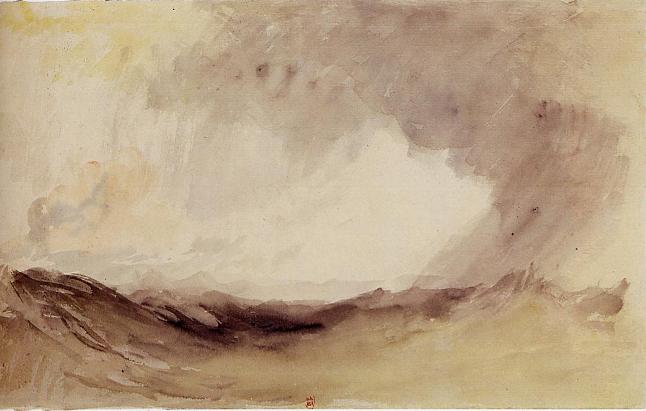
- 1. Joseph Mallord William Turner (1775-1851)
Marine - mer agitée, une bourrasque, vers 1825
Aquarelle - 18,1 x 29,2 cm
Paris, Bibliothèque nationale de France - Voir l´image dans sa page
L’exposition que propose aujourd’hui le Musée des Beaux-Arts de Lyon s’inspire clairement des cartes blanches données par le Louvre, il y a quelques années, à des artistes ou à des écrivains. Le commissaire invité est le philosophe Jean-Luc Nancy, assisté pour l’occasion par Sylvie Ramond, directrice du musée et par Eric Pagliano, conservateur du patrimoine et pensionnaire à l’INHA. Ce type d’exposition peut aisément tomber dans l’abscons, le pompeux, le prétentieux voire, parfois, le ridicule. Ce n’est pas le cas de celle-ci. On ne discutera pas ici du fond, l’auteur de cet article avouant être parfaitement nul en philosophie. On se bornera à dire que le catalogue est bien édité et riche de plusieurs essais dont on retiendra notamment celui d’Eric Pagliano sur les ratures dans le dessin. On parlera surtout de la qualité des œuvres exposées et du fait que nombre d’entre elles sont très peu connues, voire complètement inédites. Nous axerons donc notre commentaire sur cet aspect, sans ignorer que là n’est pas le propos essentiel. Mais les lecteurs de La Tribune de l’Art pourront ainsi constater que l’exposition et le catalogue réussissent l’exploit de combiner à la fois une approche philosophique et un véritable exercice d’histoire de l’art.
-

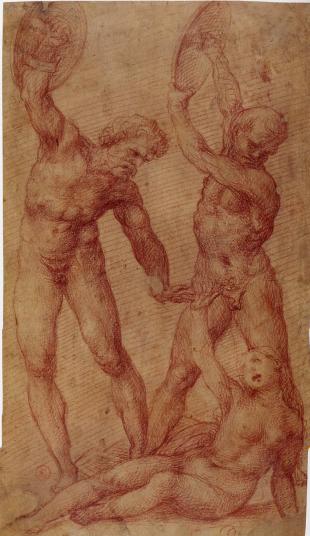
- 2. Attribué à Giovanni Antonio Bazzi,
dit il Sodoma (1477-1549)
La Vestale Tarpeia assommée
à coups de bouclier
par les soldats de Tatius
Sanguine - 40 x 22,9 cm
Paris, Bibliothèque nationale de France - Voir l´image dans sa page
-

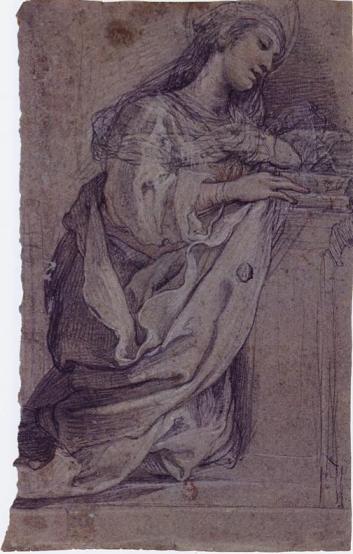
- 3. Ferraù Fenzoni (1562-1645)
Vierge de l’Annonciation
Pierre noire, sanguine,
rehauts
de craie blanche - 34,3 x 21,3 cm
Paris, Bibliothèque nationale de France - Voir l´image dans sa page
Les découvertes les plus sensationnelles viennent de la Bibliothèque…