
Contenu abonnés
Renoir Landscapes 1865-1883
Londres, National Gallery, du 21 février au 20 mai 2007. Puis, Ottawa, Musée des Beaux-Arts du Canada, du 8 juin au 9 septembre 2007, et Philadelphie, Museum of Art, du 30 septembre 2007 au 6 janvier 2008.
-

- 1. Pierre-Auguste Renoir (1841-1919)
La Grenouillère, 1869
Huile sur toile - 81 x 66 cm
Stockholm, Nationalmuseum
Photo : The National Art Museums of Sweden - Voir l´image dans sa page
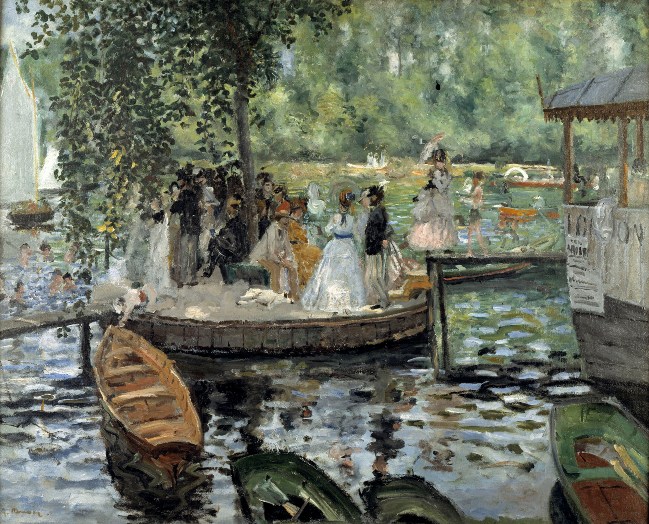
Avec une extrême sobriété, la National Gallery de Londres accueille une soixantaine de paysages de Renoir, selon un découpage et une disposition chronologiques stricts. Les œuvres présentées sont circonscrites au cadre des années 1865-1883, ce qui permet au visiteur de visualiser comment Renoir, progressivement, s’émancipe du modèle de Courbet, et trouve son (ou ses) style(s) personnel(s). La démonstration s’interrompt en 1883, au moment où le voyage en Italie, effectué en 1881-1882, et la leçon de Raphaël ont été assimilés par l’artiste : ce sera ensuite le temps des Grands Baigneuses ingresques, où le dessin prendra le pas sur la couleur, et où la figure l’emportera sur le paysage dans la production du peintre. Cette période correspond également à la fin de l’impressionnisme en tant que mouvement coordonné autour d’expositions régulières (la dernière a lieu en 1886, mais peu de membres « historiques » y participent).
----------------
-

- 2. Pierre-Auguste Renoir (1841-1919)
La Yole, 1875
Huile sur toile - 92 x 71 cm
Londres, National Gallery
Photo : The National Gallery London - Voir l´image dans sa page
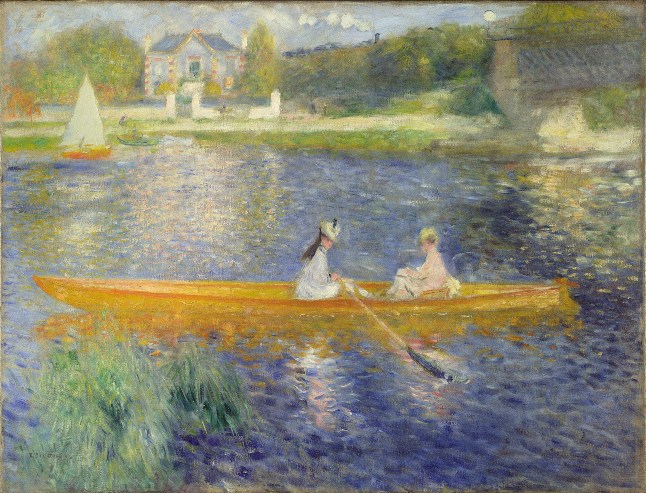
Les quatre salles gris taupe de l’institution londonienne matérialisent les grandes étapes de l’évolution stylistique de la peinture de Renoir, et, à travers elle, dressent la protohistoire de la peinture impressionniste. Avatar de Courbet et des peintres de Fontainebleau à ses débuts (Jules Lecœur et ses chiens dans la forêt de Fontainebleau, 1866, Museu de Arte de São Paulo), Renoir trouve rapidement sa voie grâce à l’émulation qu’il entretient avec Monet, avec lequel il part peindre en plein air. L’étape de La Grenouillère, en 1869, est fondamentale, et c’est un des intérêts majeurs de l’exposition que de pouvoir contempler côte à côte…